


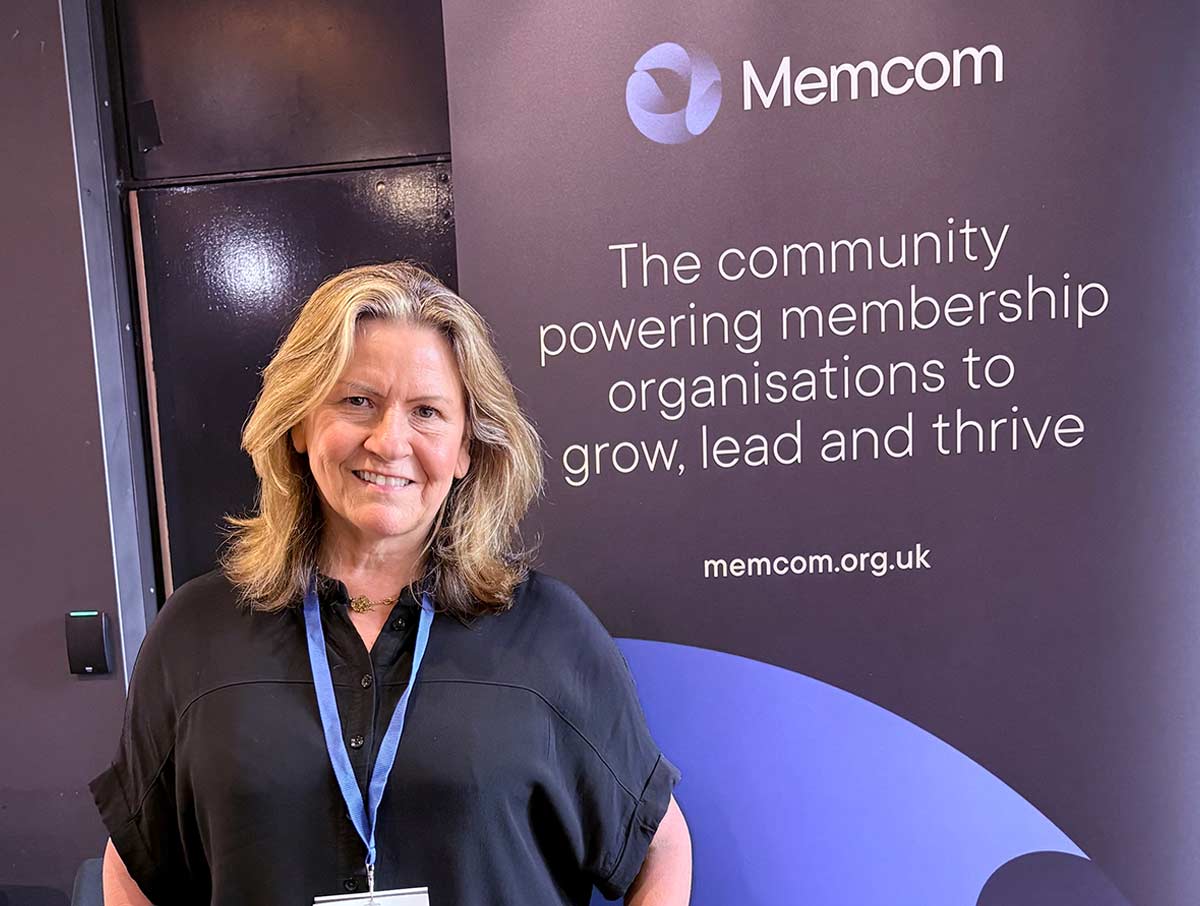
My key takeaways for membership leaders
I’ve taken some time to reflect on the conversations, challenges and opportunities discussed at this thought provoking MEMCOM forum at the start of July.
The event brought together an impressive group of CEOs, senior leaders and membership professionals, all wrestling with many of the same questions:
- How do we remain relevant in a changing world?
- How do we grow when traditional membership models are under pressure?
- How do we lead through uncertainty?
- How do we create communities that people genuinely want to belong to?
For anyone involved in membership, associations, institutes, trade bodies or professional organisations, the conversations were both reassuring and challenging.
1. The future belongs to organisations that are prepared to reinvent themselves
One of the strongest themes throughout the day was the need for courage: not operational courage – strategic courage. The courage to question assumptions that have existed for decades.
Several speakers challenged leaders to think differently about growth, relevance and organisational purpose.
A particularly thought-provoking discussion came from Sarah Poulter, Chief Executive of the Chartered Institution of Wastes Management, around collaboration, partnerships, mergers and acquisitions.
The message was clear: Don’t start with structure. Start with purpose.
Before considering collaboration, partnership, merger or acquisition, leaders must establish a shared understanding of success and a compelling strategic reason why. The decision shouldn’t be emotional or political; it should be evidence-based. Data should uncover the reality and values should determine whether the opportunity is viable.
And perhaps most importantly, leaders should fully appreciate the time, energy, resources and leadership commitment required to make these initiatives successful.
A strong advisory team is not a luxury in these situations – it’s essential.
I also loved the point made by Devina Patel, Director of Marketing at the Association of Corporate Treasurers:
“When you merge, don’t merge cultures. Create a new one.” That’s a powerful mindset shift.
Too many organisations spend years protecting legacy cultures instead of building a future culture everyone wants to belong to.
Relationships first. Trust first. Then transformation.
2. Public affairs is no longer optional
One of the most practical sessions of the day came from Dave at Riverside Communications. The discussion reinforced something many membership leaders know instinctively:
Public affairs is one of the clearest ways to demonstrate member value.
The most effective organisations:
- Become trusted sources of information.
- Spot threats before members do.
- Identify opportunities before competitors do.
- Provide informed commentary and practical talking points.
- Influence debates before decisions are made.
What struck me most was the emphasis on simplicity. Many organisations still communicate with policymakers as though they have specialist knowledge of their sector.
They don’t; most MPs are dealing with dozens of issues simultaneously.
The advice was refreshingly straightforward:
- Keep messages simple.
- Remove jargon.
- Use evidence.
- Bring issues to life through human stories.
- Focus relentlessly on the outcome you want.
I particularly liked the concept of focus – only pick the issues that matter most. Own them, build alliances around them, present compelling evidence, and then keep showing up.
Influence is rarely achieved through a single conversation; it’s achieved through consistency.
3. Strategy is becoming more fluid than ever
One of the richest discussions of the day focused on leadership in an environment of constant disruption.
We heard insights from leaders dealing with uncertainty from every angle:
- Artificial intelligence
- Geopolitical uncertainty
- Economic volatility
- Changing member expectations
- Talent shortages
- Rapid technological advancement
The challenge many leaders described was familiar: we’re increasingly forced to make decisions using incomplete information. Waiting for certainty often means missing the opportunity. This led to a fascinating discussion around risk management.
Not simply asking:
“What could we gain?”
But instead:
“What are we prepared to lose?”
For smaller organisations especially, this changes the decision-making framework significantly.
One observation particularly stayed with me. A leader remarked: “The future is so uncertain we don’t have a strategy because agility is more important right now.”
Whether you agree or disagree, it highlights the reality many organisations are facing.
Adaptability is becoming a competitive advantage.
4. Resilience isn’t the right word anymore
A standout contribution came from Paul Jobson, Chief Executive of the Royal Institution of Naval Architects. He challenged the increasingly common use of the word “resilience.” Instead, he advocated for perseverance.
I found that distinction powerful. Resilience often implies absorbing shocks – perseverance implies moving forwards despite them.
In a world that feels increasingly divided and uncertain, there was also discussion around organisational preparedness.
Not just operational preparedness; leadership preparedness.
Do our teams have the confidence and capability to move quickly? Can they make decisions? Can they learn from mistakes? Can they operate with a start-up mindset?
Many organisations are also exploring growth beyond traditional boundaries: new audiences, new partnerships, new pricing models and new markets.
The phrase that stuck with me was: look for asymmetric opportunities. The opportunities that others may not see because they’re too focused on protecting today’s model.
5. Cybersecurity is now a board-level strategic issue
One of my favourite sessions came from Giles Grant, Chief Executive of the UK Cyber Security Council. His message was clear: cybersecurity is no longer a technology issue. It’s a leadership issue. We are witnessing the emergence of entirely new threat landscapes driven by AI, automation and increasingly sophisticated attacks.
The phrase he used was: VUCA
Volatility.
Uncertainty.
Complexity.
Ambiguity.
And that feels like an accurate description of the environment many leaders are now operating within.
Several messages resonated strongly:
Strategy must not live in the top drawer.
Too many organisations create strategies that are admired but not used.
Decisions should be based on data, not opinions.
In an increasingly volatile world, evidence matters more than hierarchy.
Stay humble.
Stay nervous. Stay curious.
Perhaps my biggest takeaway was his challenge to leaders to become forensically curious. Ask more questions, challenge assumptions, seek evidence, understand members deeply and look at the world from the outside in.
The concept of understanding a “Day In The Life Of Your Customer” is something every membership organisation could benefit from.
Most importantly:
Only develop solutions that people are genuinely prepared to pay for.
It’s amazing how often organisations forget that simple test.
6. Engagement is not participation. Engagement is advocacy.
The session on building communities of fans was packed with insight. One statement stood above everything else: “Advocacy is the best measure of engagement.”
Brilliant.
Because attendance, clicks and opens don’t necessarily indicate loyalty – advocacy does.
The strongest contributions came from Sophie Tothill at the Chartered Institute of Personnel and Development, alongside contributions from Katie Thompson and Jo Keene.
Several themes emerged:
Segmentation is no longer optional.
Different members have different needs. Different career stages require different value propositions. Different demographics engage differently.
Behavioural insight matters.
We need to understand not only what members do, but why they do it.
Community beats broadcasting.
The future isn’t endless webinars, it’s creating meaningful opportunities for knowledge sharing, participation and co-creation. The most engaged members stop behaving like customers: they begin behaving like champions. They become proud representatives of their profession and passionate supporters of their community.
That’s where real engagement lives.
7. The membership sector is entering one of its most important decades
The final discussions focused on what membership might look like over the next five years. The answers were intentionally provocative.
Adam Boddison OBE challenged leaders to undertake rigorous horizon scanning and scenario planning.
What if today’s membership models no longer exist? What if communities matter more than formal membership? What if influence becomes more important than subscriptions?
Georgina Waite raised another challenging question: what if future generations simply don’t value membership in the same way as previous generations? Could subscription models become part of the answer? Could community become the true differentiator? Could membership become more specialist and niche than broad and universal?
The truth is nobody knows with certainty. What we do know is that standing still isn’t an option.
My final reflection
As someone who spends every day working with membership organisations, trade associations, institutes and professional bodies, I left the forum feeling incredibly positive. The quality of leadership across the sector is exceptional.
In many ways, membership CEOs and senior leadership teams have one of the hardest jobs in any sector. They are expected to:
- Deliver more with less.
- Balance commercial realities with purpose.
- Drive growth while protecting legacy.
- Lead change while maintaining trust.
- Create value for increasingly diverse audiences.
What impressed me most was the willingness to challenge traditional thinking. The sector is becoming more strategic, more data-driven, more customer-centric and more innovative. Leaders are exploring new revenue models, new partnerships, new markets and new approaches to engagement. They’re building resilience in new ways. Making bold decisions, testing assumptions, creating organisations fit for the future. And that’s exactly why I love working in this space.
Membership is unique; it’s a special community. At a time when the world feels increasingly fragmented, membership organisations create connection, belonging, professional identity and collective purpose. Perhaps that is their greatest opportunity of all.
Because in an uncertain world, community may become the very thing that creates resilience, and that makes the work of membership leaders more important than ever.
At CMDi, we believe every successful transformation begins with clarity. Clarity of purpose. Clarity of value. Clarity of direction. If you’re considering how your organisation can remain relevant, influential and indispensable in a rapidly changing world, let’s have a strategic conversation about what comes next.
Get in touch today
You can request:
- an introduction to CMDi
- a tailored brand and strategy overview of the CMDi approach, or
- a team workshop tailored to your organisation
Growth doesn’t come from shouting louder. It comes from being clearer.
Let’s sharpen your brand and unlock the growth that comes with it.