

The 2025 BMF State of Sustainability report is out, and it delivers a clear message: We are progressing. But we are also at real risk of losing momentum.
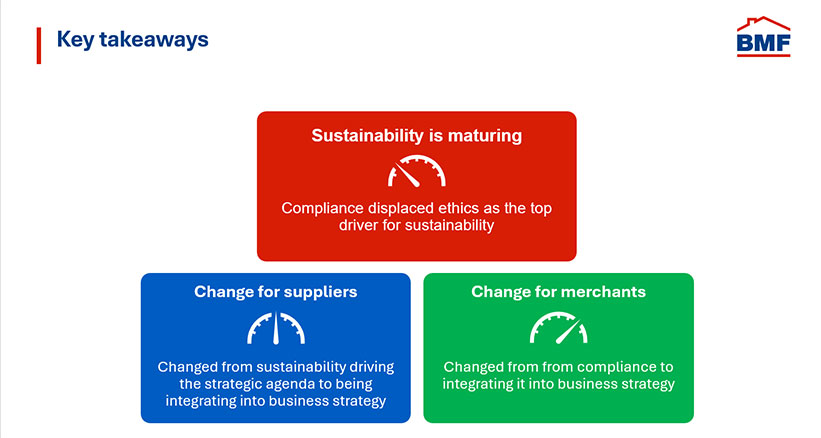
Yes, sustainability is maturing.
Yes, more merchants now list it as a top-three priority.
Yes, 42% of suppliers now have EPD coverage across 80% + of their portfolios (up from 34% last year).
But beneath that progress, something worrying is happening:
The biggest barriers to sustainable materials are now all customer-related.
And merchants still struggle to shift conversations away from price-only mindsets.
Even more concerning: half of merchants still aren’t talking to customers about EPDs, and 4 in 10 small merchants don’t even know if their products have them.
This is the gap we must close.
 |
This sector has made real progress – but now we must protect it. Sustainability cannot become optional because market conditions are tough. Momentum is fragile, and we cannot afford to lose the wins we’ve fought for.Dianne Lucas, Managing Director, CMDi |
A sector split in two
Leaders are integrating sustainability into their business strategy. Laggards still have no goals, no specialists, and no structured approach.
In a tough market, it’s tempting to put sustainability “on hold”, but the report shows the opposite:
The companies who kept sustainability central are the ones proving more resilient and competitive. This is the moment the sector must decide – are we accelerating together, or leaving half the industry behind?
The role of merchants should be about simplifying the message – that’s how they will become invaluable. As the BMF’s recent ‘Merchant branch of the future’ report also showed: we need to shift conversations from price to sustainability, but make the message easy to understand and action.
|
Sustainable building materials are not a niche. They are the future. Every merchant who avoids EPD conversations today is choosing to fall behind tomorrow.Giles Bradford, Chair of Working Group 1 & Head of Sustainability, Bradfords |
The BMF is delivering the support members asked for
Members told us clearly what they need most:
1. Compliance guidance
2. Help talking to customers about EPDs
3. Tools to understand evolving customer needs
The BMF is responding with:
- Practical sustainability toolkits
- Regulatory and compliance alerts
- EPD communication frameworks
- Working Group 1 guidance on sustainable product adoption
- Training for customer-facing teams
- Case studies, templates and best practice playbooks
As co-facilitator of Working Group 1 with Giles Bradford, I see first-hand the impact this support is having – but we need far wider adoption.
Five actions for builders’ merchants
1. Normalise talking about carbon and EPDs with customers
No more “we don’t discuss that here”; suppliers are talking to contractors and merchants must catch up.
2. Make sustainability a growth driver, not a compliance chore
Merchants who integrate sustainability into strategy are seeing the performance uplift the data predicts.
3. Train your teams to point customers to the right choices, confidently
“Cheapest” must no longer be the default recommendation.
4. Demand better sustainability data and transparency from suppliers
You can’t sell what you can’t explain, and customers won’t pay a premium for something you cannot articulate.
5. Move now
The market won’t wait for the perfect moment – there isn’t one.
|
The BMF will continue giving members the tools, clarity and confidence needed to stay competitive, compliant and future-ready.John Newcomb, CEO, BMF |
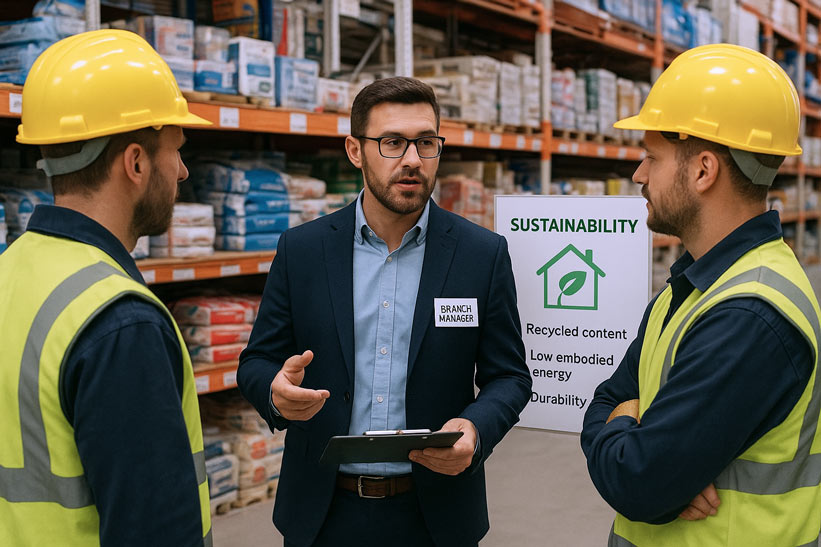
The single most important action that can help drive the adoption of more sustainable building materials is enabling merchant teams to talk to customers about what makes a product more sustainable; about carbon reduction and EPDs.
A rallying call to the sector
The findings are unmissable: progress is real, but fragile. Momentum is building, but uneven. Leaders are emerging, but too many remain at the start line.
2026 needs to be the year the sector decides to pull together.
Sustainability isn’t a burden, it’s an advantage: commercial, operational, reputational and competitive.
Let’s not wait for another report to tell us the same story; let’s accelerate our journey towards more sustainable building materials together.